
Heeding the call
of the Motherland.
Afternoon Spent in the Company of Baboons (turn the sound UP and you’ll enjoy the unmistakable and ceaseless hoot of the yellow-fronted tinker barbet . . . and be sure not to miss mama baboon with a beloved babe clinging to her belly!), Umani Springs, Kenya ~ video credit: Stephanie C. Bell
Epigraph: I had the tremendous honor to visit Kenya’s esteemed Sheldrick Wildlife Trust in 2024, whose extraordinary re-wilding and conservation work I’ve referenced in several of my writings.
They embody a profound model of what life in compassionate and empathetic harmony with other species and the natural world around us can look like.
Joyously, in two days I’m going back to visit again. I will be taking a hiatus from Substack while I’m away so you will be seeing less of me here in the coming weeks. . . and more from me (in an anticipated state of euphoria) after my return.
In the interim, I want to share with you the letter below which I sent to friends and family while still processing the overwhelming experience that forever changed my life. My wish is that the sensations, imagery, and ecosphere in these words call up your own enchanting places on the planet that are similarly nourishing.
“I almost stayed behind glass and wood and walls. I almost didn’t go out into the ashy night air. I almost missed this moment under the fiery sky, with this gentle [being] breathing warm and hot upon my face. I almost didn’t listen to the voice that whispered, ‘Run, don’t walk,’ to the life that longs to love you outside your window.” ~ Sarah Blondin
Feb. 2024
Beloveds,
I hope this letter (about Africa instead of from because yes I am now home) finds each of you well despite the onslaught of headlines and ceaseless work required of us all.
While I have left Africa, she has most definitely not left me.
Her water- and shade-giving baobabs and gingerbread palms, towering termite mounds that are keystone to savannah ecosystems, undulating landscapes flecked with butterflies and wind-swept acacias, and resilient beings fill my dreams with a velvet viscosity I lack sufficient words to convey.
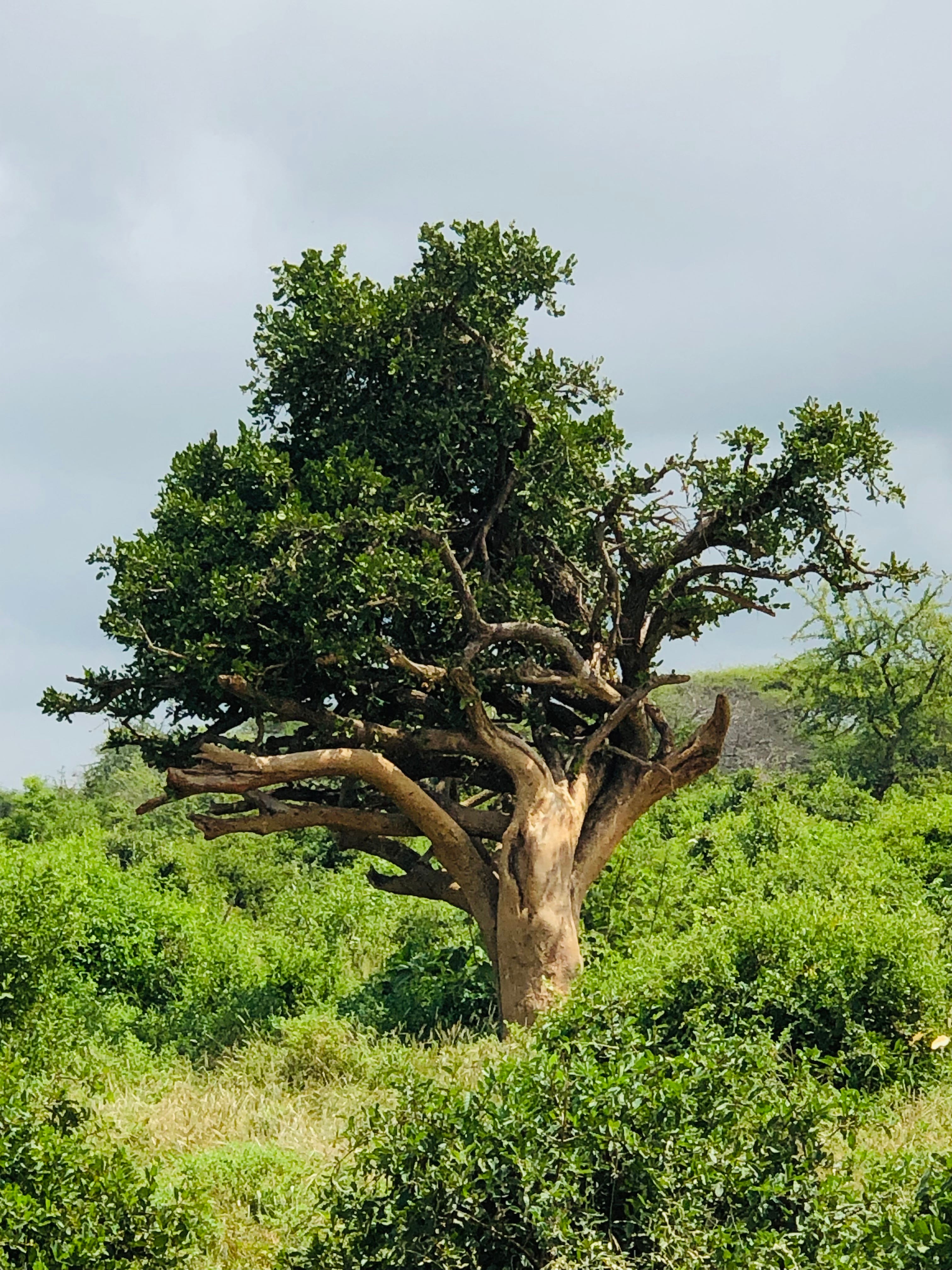
I welcome sleep so that I can fall back under the savannah’s binding spell.
Each night before I slip toward it, I find myself wondering where each unique group of nursery elephant orphans have opted to spend their new day grazing. Will the tiniest elephant in Nairobi get her red coat mischievously untied by wayward Weka and trunk-tossed playfully through the amused herd while the keepers laughingly try to retrieve it . . . again?
I trust the dependent herd in Umani woke up in good moods as they rejoined the “nightclubbers” (former orphans, now wild, who roam freely after dark) for a dust bath and morning snack of specialized maize pellets. The crushed remnants are then inhaled by wild baboons, affectionately referred to as the “table cleaners.”
Has wobbly neonate Korbessa perked up with the addition of antibiotics in her soya bottles?
And has majestic Sattao, with those liquid-gold eyes blinking gently under impossibly lush long lashes, yet chosen to spend his first night outside of the Ithumba fences?
When we left his particular herd, he was so close—predictions were that he’d likely be reintegrated back into the wild by March (2024). He had several wild male counterparts eagerly anticipating his imminent choice to join their “boys club,” lingering wistfully outside his open gate each morning.
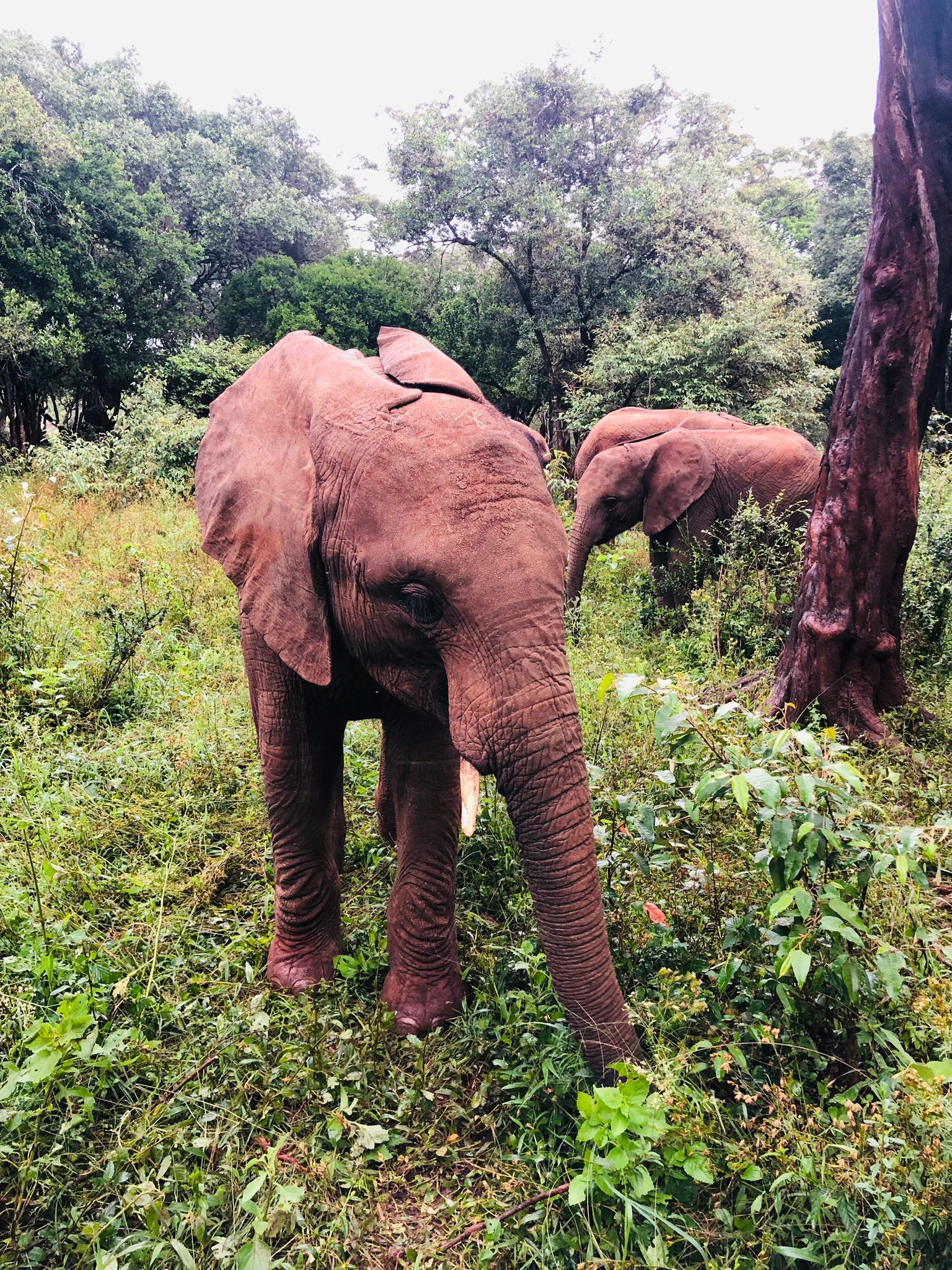
Whether I am moving or motionless, East Africa and all she nurtures are now within me. Genetic strands of cellular memory rewritten to encode a new awareness of love and longing.
This morning I heard the uncommon chortle of a single raven flying overhead. Her playful arc in the sky made me think of East Africa’s boisterous hadada ibises and their raucous calls and chase-games in Kibwezi Forest.
Foraging gray squirrels in our local wetlands are positively gargantuan compared to those we saw skittering, small and svelte, alongside East Tsavo’s red-ochre roads.
Inversely, the snails on my favorite local hikes are miniature juxtaposed with the mighty African snail, who is larger than my hand and transports herself inside a conch-like shell reminiscent of oceans nowhere near.
Wild roots linking to our shared past everywhere we look.
One of my sweetest simple pleasures when I’m walking out in the world—concrete urban or tangled wild—is to chance upon a feather.
Flightworthy, yet fallen. Formidable, yet fleeting.
I adore the soft downy fluff near the calamus where the feather once anchored itself to a living creature capable of the miracle of flight.
It’s always a puzzle to determine the bird species who left behind an intricately designed masterpieces of nature’s aeronautical artistry. And tail, neck, or wing?
These once-flighted finds are cached in decorative bowls and boxes, display cases and designated drawers, favorite books and journals . . . and every now and then a coat pocket.
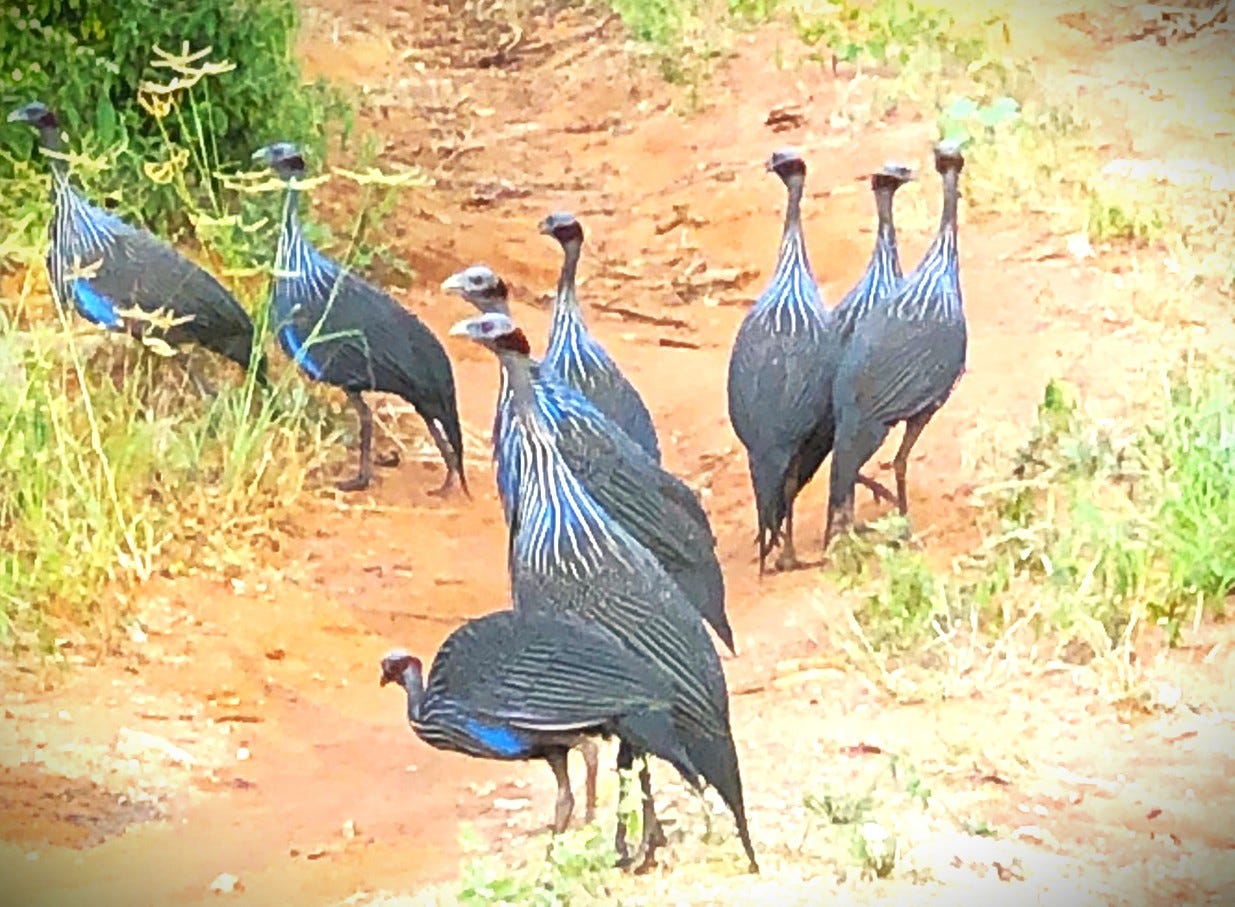
You can imagine my joy, then, while still deep in the bush of East Tsavo our keen-eyed naturalist Letaloi lurched us suddenly to a stop, hopped out of our vehicle, and gathered up in his gentle hands a single vulturine guinea fowl tail feather adrift on the wind.
My travel companion and I had marveled repeatedly at the exquisite beauty of these bare-headed birds with their elegant blue and white hackles, cobalt brilliant-blue breasts, piercing red eyes, and bespeckled black plumage that resembles a richly starred rural night sky. Living art.
And now here in our grasp was a tiny remnant of nature’s design prowess, so intricately woven and adorned as if hand-painted.
Having traveled many miles—long before it fell loose, and now with me on another continent—this gossamer gathers with barred owl, crow and raven, junco, varied thrush, gull, chickadee, towhee and flicker plumes collected over the years.
A tribute to the bewildering brevity and beauty inherent in life.
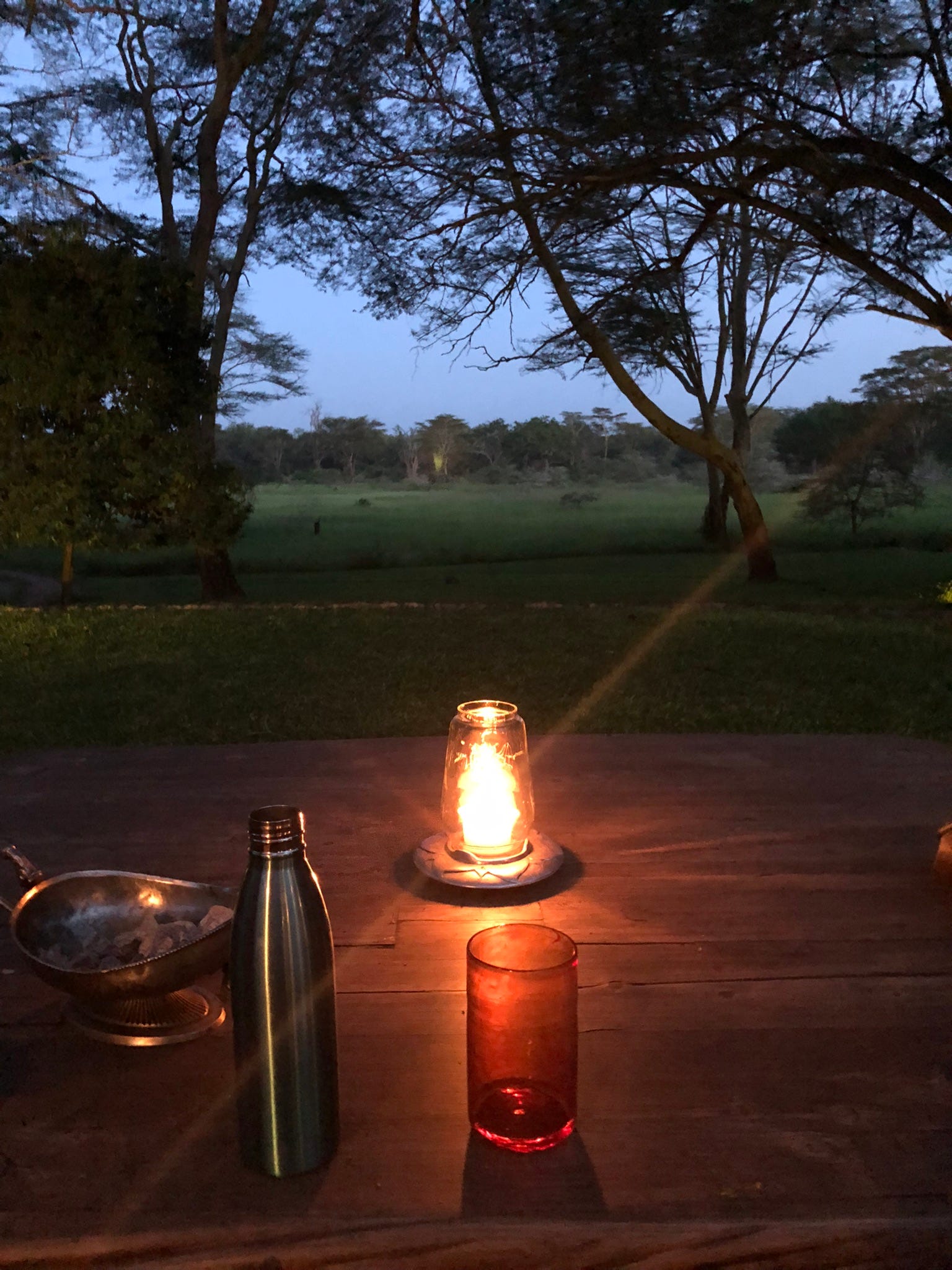
“Look closely at the present you are constructing: it should look like the future you are dreaming.” ~ Alice Walker
Present-day (2026) updates:
Wonderfully naughty Weka (a trait that is celebrated and serves elephants well in the wild) has since graduated from the nursery to join the older but still-dependent herds of Ithumba, inching ever closer to her birthright of the wild.
Korbessa prevailed thanks to her remarkable resilience and, of course, her keepers’ devotion. She is now a doting mentor to recent newcomer Kaikai, and doing beautifully as you can see here.
Finally, Sattao did indeed choose to go wild soon after I left! The life he—and every elephant—was meant for. I hope to catch a glimpse of him with friends on the horizon.
Incredible. Let your adventure back to Africa refill your beautiful soul. I hope you get to reunite with familiar faces—human and nonhuman alike.
I just can't wait to hear more of your adventures on your return to Africa!! I delight in your prose, i can feel myself there among the wild creatures. Love and hugs, and prayers for safe travels!! 💕